Note: The following article was based on oral interviews with John Alfred Rambottini. During 1986-1988, Mr. Rambottini recorded two interviews and an oral history about living in Colfax during the 1920s. Mr. Rambottini, who was born in 1902, came to Colfax in 1920, and worked at various jobs, including the local TB sanatoriums. Because the interviews were transcribed from recordings, there is some uncertainty about the correct spelling of some names. This transcription was originally published in the December 2021 edition of the Colfax Cobblestones newsletter.
By Verne D. Wilt | September 9, 1988
Mr. John Rambottini first came to Colfax in 1920 and was employed by Dr. Robert A. Peers at the Colfax Hospital. John provided general transportation and delivery service for the hospital for just two weeks. Dr. Peers wished John to live on the hospital grounds; John declined to do so.
He then was employed by James Scarborough at the Colfax Trading Company for two to three months.
John worked until the late spring of 1923 at Fruge and Tiffarough’s [or Tiffereau’s] Colfax Garage as a mechanic. John left Colfax for Tacoma, Washington, and later Santa Rosa, California. He returned to Colfax and employment at the Colony in 1924.
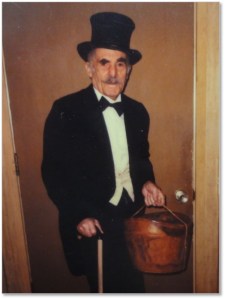
John worked at the Cottage Colony of the Colfax School for the Tuberculous until October of 1926, a period of approximately two years. He did all of the shopping and laundry delivery, banking, postal pick-up, and Colfax Drug store prescription delivery for the people living in the Colony, and he acted as their taxi and school bus service. He drove a utility wagon service called the “Candy Wagon.”
What was the Colony? The Cottage Colony of the Colfax School for the Tuberculous was a group of 31 cottages for TB patients who were accompanied by their own attendants. Patients who were unable to bring their own attendants lived in the nearby Colfax Hospital for the Tuberculous, which was operated in conjunction with the Colony. Doctor Robert A. Peers was the Medical Director.
People charged their groceries at the local market. However, the drug store prescriptions had to be paid for at purchase time, so John was paid a small fee by the druggist for this service.
He used a one-ton Ford Model “T” truck with side curtains for general delivery and freight. He had the use of a Chalmers automobile for passengers and school children transportation.
John’s salary was $35.00 per month including room and board, with his laundry, and he had use of the vehicles.
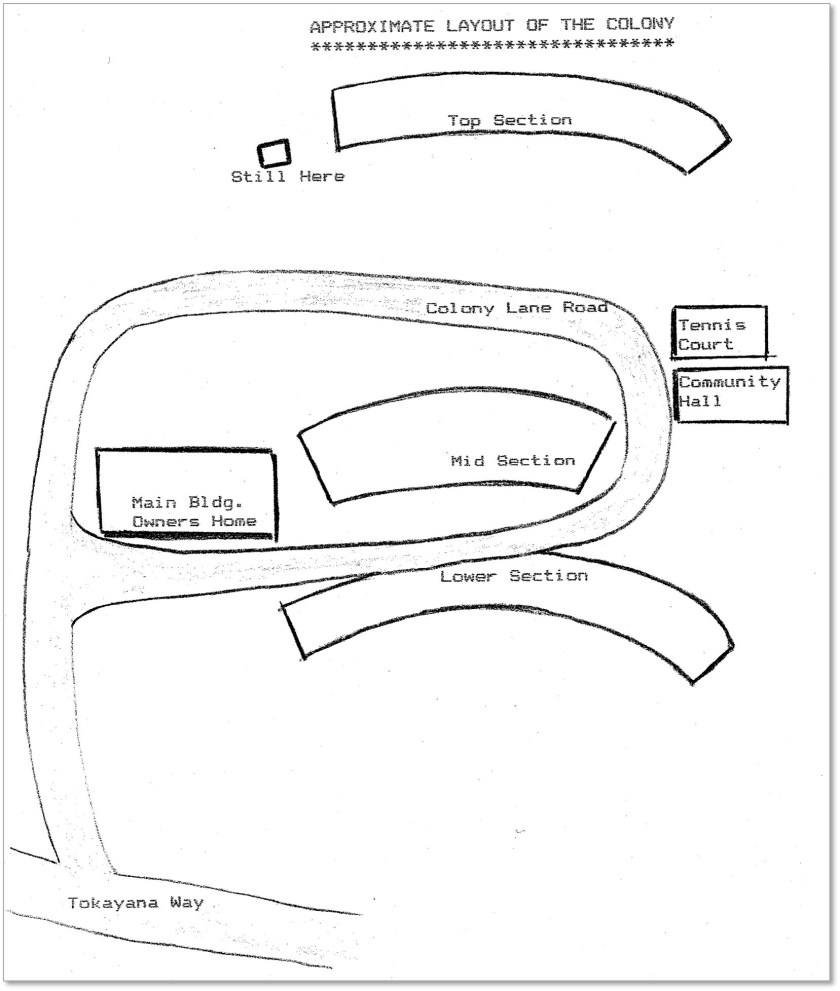
The Colony was located at the end of Colony Lane off Tokayana Way. There were thirty-one cottages, an impressive owners’ home, a workshop, and a large Community Building for cards, checkers, and movies one or two times a month. The Community Building was just one large room, no fireplace, but it did have bathroom facilities. No other convalescent home, hospital, or sanatorium was ever called or referred to as the Colony.
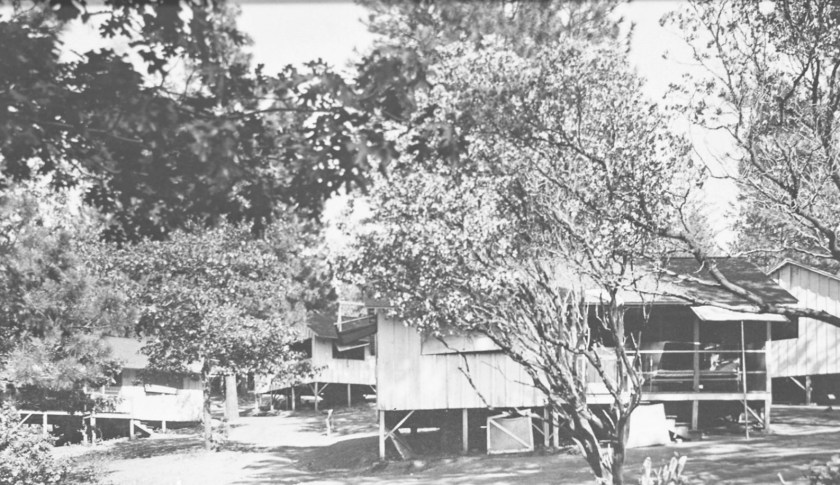
The cottages were frame with shingle roofs on tall (4 ft.) foundation piers of wood with no skirting. They were one bedroom, kitchen, living-utility room, and bathroom. Heat and cooking was by wood stove which had coils to heat the water. They had running water and electricity. There was no window glass, just screens and roll up canvas flaps to cover the openings. Each kitchen had an ice box but no refrigerator. Floors were wood, with linoleum in the kitchen and bathrooms.
The Colony was always fully occupied, and there was a long waiting list.
The main building was the owners’ home where John had his room. There were six to eight employees including the operators, Frank and Eva Roscelli. Besides Mrs. Roscelli, Mrs. Canolish and Mrs. Airola helped with the cooking chores since two of the cottages were for convalescing patients that required full time care. Their meals were served on tray or, if the patients were able, they went to the kitchen to eat.
There were two handymen, Nate Klinkenbeard and his brother Bill. They did all maintenance and up-keep and plumbing repair.
A doctor was on the premises during the day: Dr. Pierce, a single gentleman, and later Dr. Donnivitz, who was married with one daughter. They lived in a separate house on the hill adjacent to the Colony. Dr. Peers was the head physician in charge of the patients.
People of note living at the Colony were “Miss Woods,” a prima donna actress who had a housekeeper named Mrs. Shepard. She was visited on several occasions by the famous director Adolph Zucker. Also, Mrs. Nausman, a writer, and a priest, Father Vaughn, who had TB and lived in cottage #28.
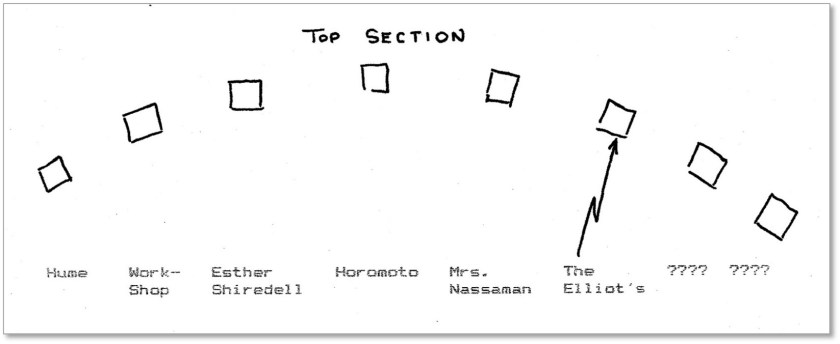
A writer, Mr. Elliot, Esq., his wife and daughter lived at the Colony all during Mr. Rambottini’s employment. Mr. Elliot was from the Bay Area, tall and well built, of light complexion, a very quiet person, and approximately 45 years of age. The Elliott cottage was located in the “Top Section” of the Colony.
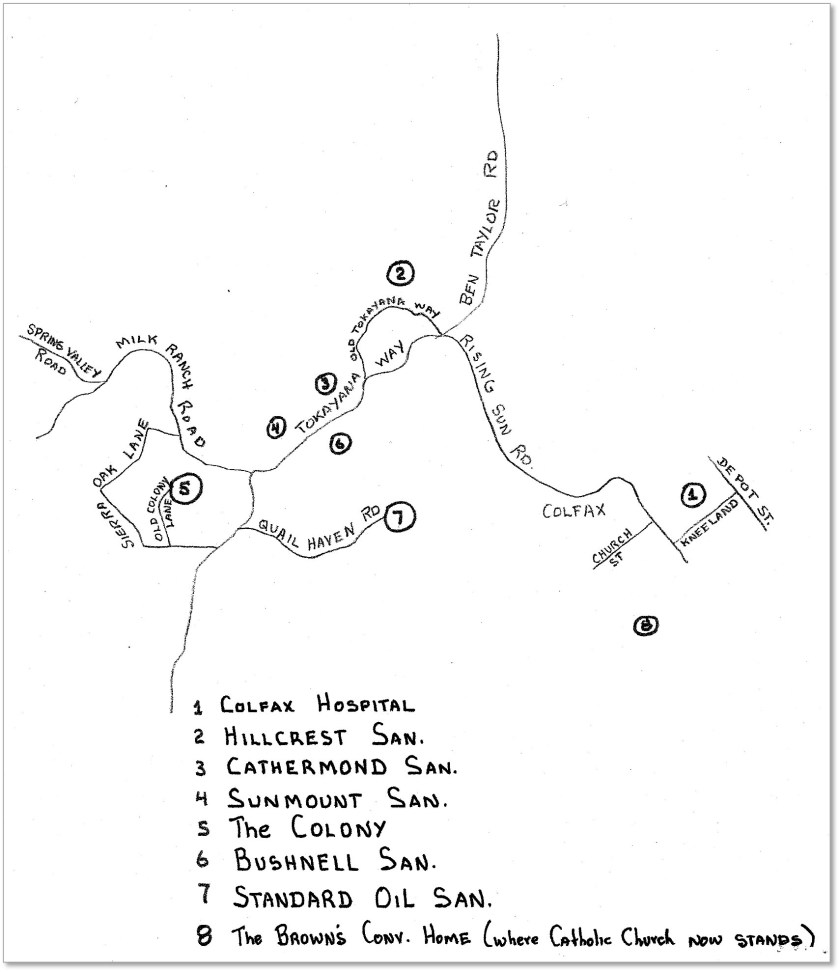
This map was created in the 1980s.
You can read more about the treatment of tuberculosis in the Colfax area in the book Dr. Peers and the Colfax School for the Tuberculous, by Roger Staab. This book tells the story of Dr. Robert Peers and the history of treating TB in the Colfax area in the early twentieth century. It is is illustrated with more than 50 photographs, maps, and historical advertisements of the TB hospitals and treatment centers in the Colfax area.
 Colfax Area Historical Society (CAHS) and Colfax Heritage Museum (CHM)