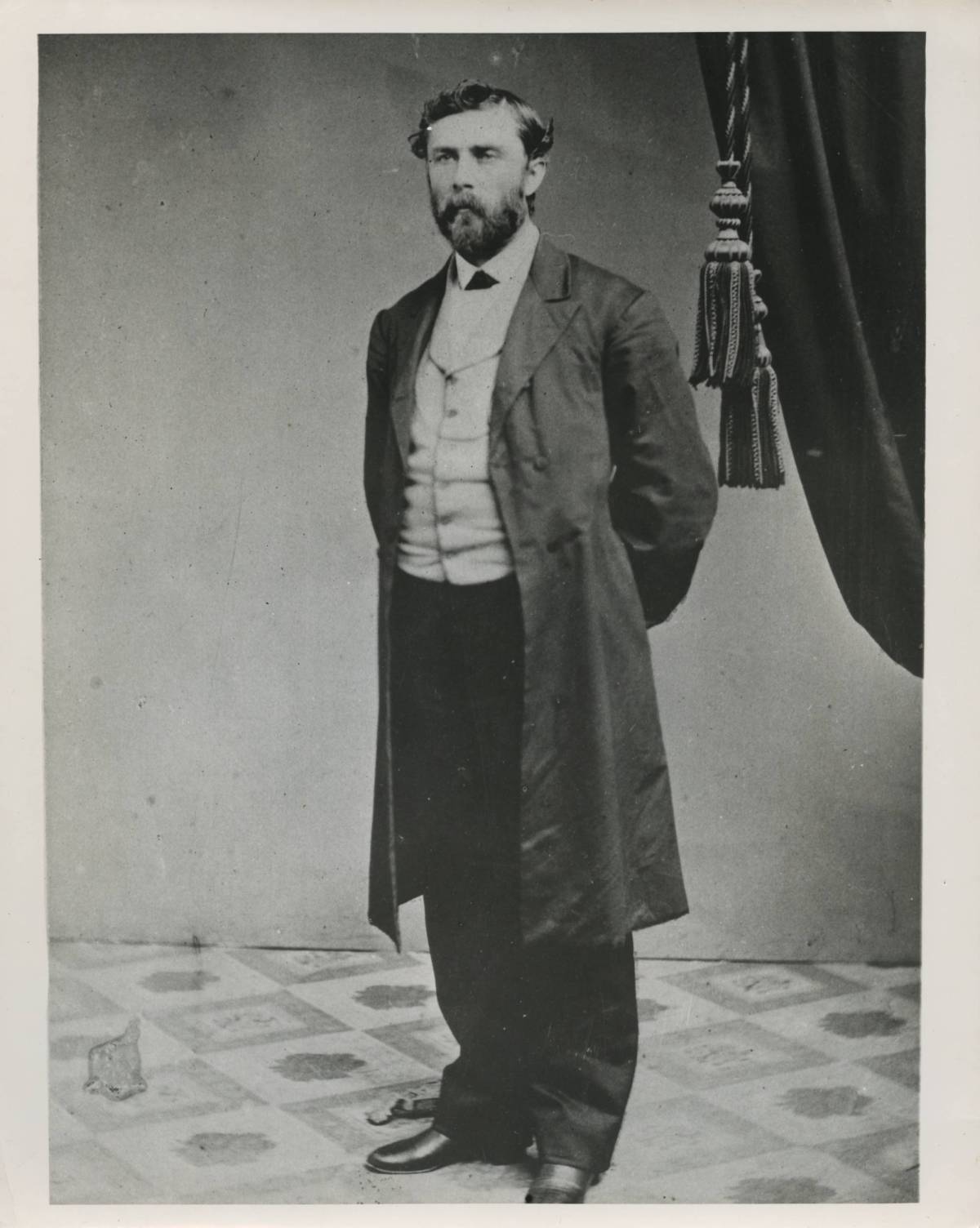
While the idea of a “Pacific” railroad had been proposed by many people, the Donner Pass Route is indelibly linked with the dreams and tenacity of Theodore Judah.
Originally hired as Chief Engineer for the Sacramento Valley Railroad, Judah came to California from New York in 1854. Upon completing his work on the SVRR line, Judah turned his attention to a railroad that would link the West and East Coasts. In 1857, he published a plan for building a “Pacific Railroad” using private, not public funding.
He began a prolonged search for investors to help him realize his dream. Crossing the rugged Sierra Nevada range in California represented a major obstacle to the Pacific Railroad, and several routes had been proposed. Judah believed a central crossing was feasible and, in fact, preferable to crossings that were proposed further north or south. Based on additional survey results, he convinced a group of Sacramento businessmen that his idea had merit.
In 1861, the Central Pacific Railroad of California was incorporated with Judah as Chief Engineer, and the “big four”, Stanford, Huntington, Hopkins, and Crocker as officers and chief investors in the venture.
Theodore Judah did not see his dream reach reality. While crossing the Isthmus of Panama on a trip east to raise money to buy out his fellow investors, Judah became ill (perhaps with yellow fever) and died in New York in November 1863.
The Donner Pass Route of the Transcontinental Railroad
An Abbreviated History Compiled by Placer-Sierra Railroad Heritage Society
Roger Staab and Tony Hesch
 Colfax Area Historical Society (CAHS) and Colfax Heritage Museum (CHM)