We research and share the history of the Colfax, California, area, operate a museum, and work with other organizations to understand and appreciate our local history.
Author: Colfax Area Historical Society, Colfax, CA
Celebrating Railroad Changes and Incidents That Redefined the Region
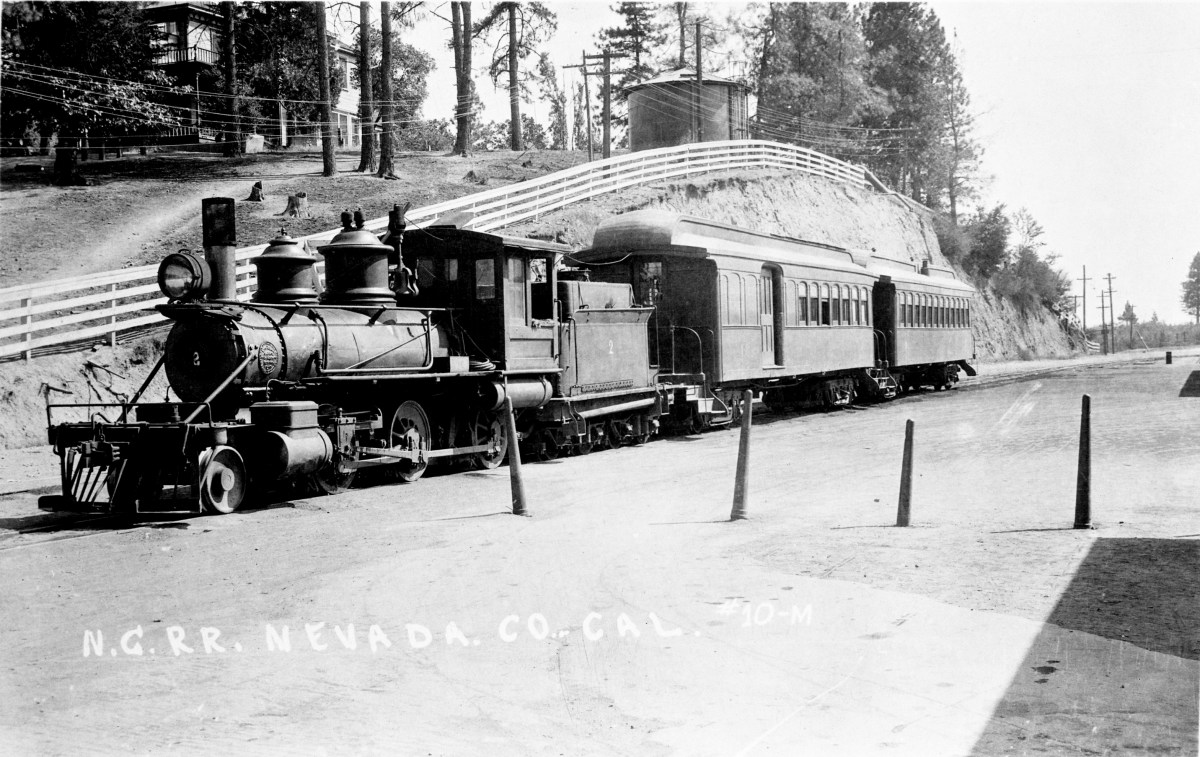
We hope you will join us for a great presentation about Colfax and some of the changes over the past 160 years — since the town was created by the railroad in 1865.
Saturday, October 11, 2025 at 4 pm in the Colfax Passenger Depot 99 Railroad St, Colfax, California
Roger Staab prepared this program for the Placer Sierra Railroad Heritage Society and in honor of Colfax’s 160-year link to the transcontinental railroad.
The October issue of Colfax Cobblestones includes the story of the forest fire that threatened the TB Sanatoria in Colfax 102 years ago, in 1923.
This story was originally printed in the Tea Bee magazine, Vol. 11, No. 9, October 1923, which was published by the Colfax School for the Tuberculous in Colfax, California. It was transcribed by Roger Staab.
The October issue also includes information about our October 11 presentation and a timeline about the history of Colfax from 1849-2007.
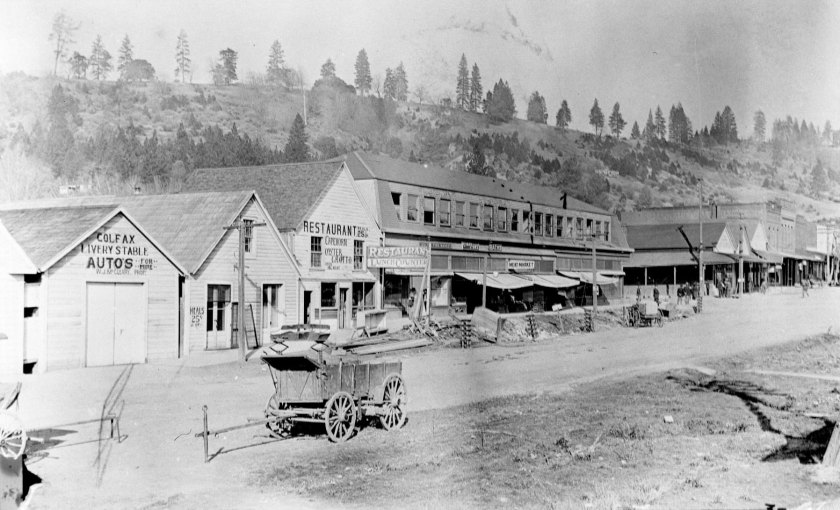
The Lobner Building and other businesses on Main Street, Colfax, California, circa 1900. The Lobner Building is the two-story building in the center of the photo. This photo was taken about 1900.
Ninety-five years ago, a morning fire in downtown Colfax, California destroyed a café and a barber shop before it was put out. The Lobner Building caught fire twice but was saved. The fire train that Southern Pacific quickly brought to the Grass Valley Street crossing to help the Colfax fire department was crucial to saving downtown.
The July 2025 issue of the Colfax Cobblestones newsletter includes the story as originally reported in the Colfax Record and Sentinel, on June 20, 1930. The fire itself occurred on June 18, 1930.
Roger Staab transcribed the article from the original publication. This story also appeared in the June 2025 issue of the Placer-Sierra Railroad Heritage Society newsletter.
Updated location: Mike Ray’s presentation will now be at Colfax City Hall, 33 S Main St, Colfax, California.
Join us Saturday, April 5, 2025, at 4 p.m. for stories, photos, memorabilia, and a film about the Colfax Fireballs, a baseball team that represented Colfax, California, from 1947-1993.
There is no charge to attend. Everyone is welcome.
The Colfax Fireballs’s fans turned out for the 1982 ASA (Amateur Softball Association) state tournament held at the Colfax Living War Memorial Park, Colfax, California.
Mike Ray, former sports editor of the Grass Valley Union and the Colfax Record, will display memorabilia and tell stories about the Colfax Fireballs. The team began as a hardball team in 1947 and switched to fast-pitch softball in 1956. The Fireballs competed against teams from Reno, Tahoe City, Grass Valley, Santa Rosa, Chico, Monterey, Pacific Grove, and other Northern California cities.
The Colfax Fireballs, 1977.
Beginning in 1966, the Colfax Fireballs hosted an annual fast-pitch tournament that continued until 2014. It began small, as part of a Recreation Day sponsored by the Colfax Recreation Department, which included activities at the swimming pool, games, softball, and a Saturday night dance.
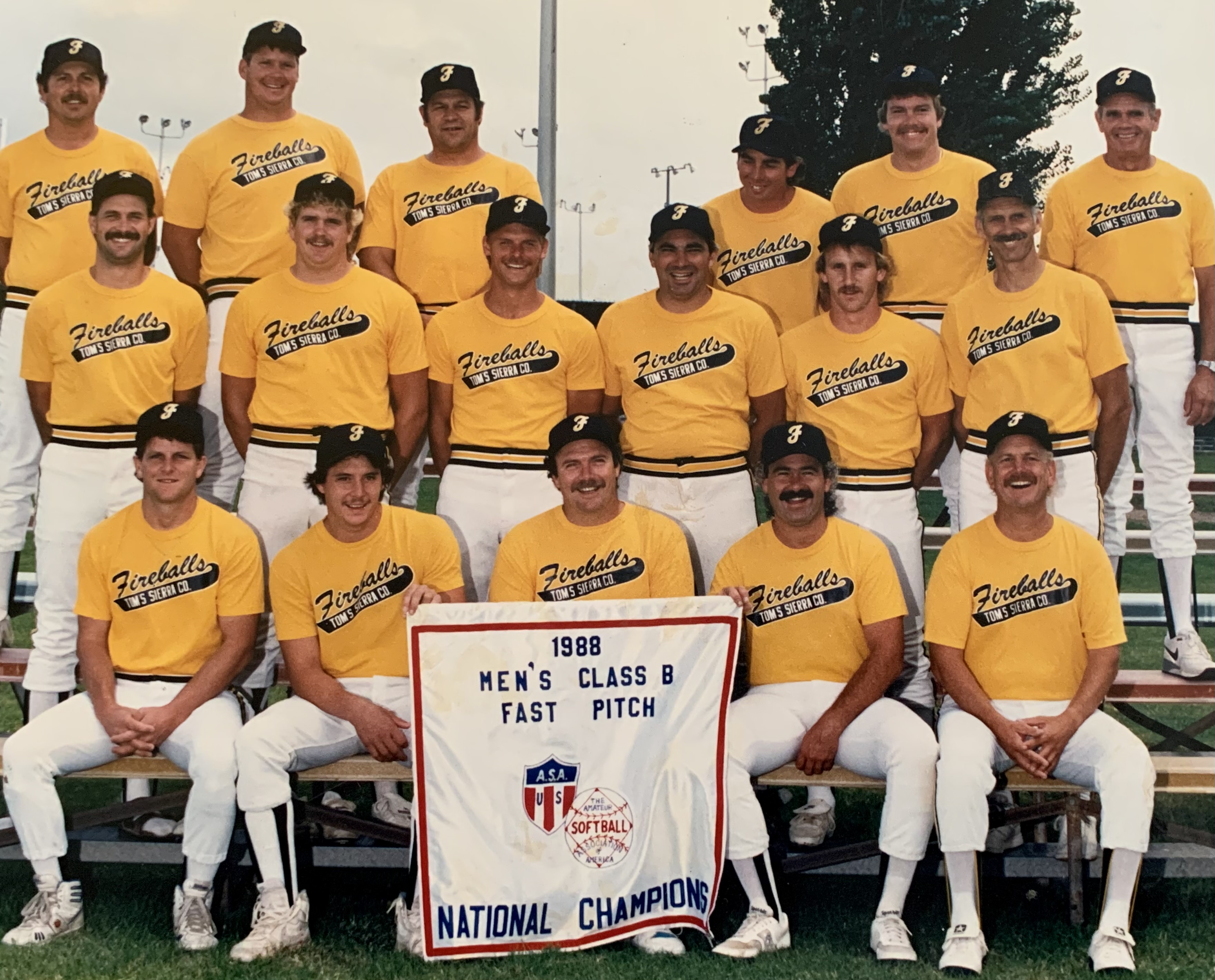
The Colfax Fireballs at the ASA Nationals, Las Cruces, New Mexico, 1988.
The annual tournament would begin on Thursday or Friday and continue through Sunday. Over the years the number of teams in the tournament ranged from four to as many as 22.
The April 2025 Colfax Cobblestones newsletter contains a short article about the letters that Myrtle Findley received from servicemen during WW II. During the war, Myrtle wrote letters to U. S. servicemen throughout the United States, Canada, Europe, and North Africa. She donated a scrapbook of the letters that she received from them to the Colfax Area Historical Society. It contains letters that she received from 1943-1944. The scrapbook is in the Archives Room of the historical society.
Its delicious food became famous after the Benhards began publishing the Benhard Road Information Bulletin, which they distributed through service stations.
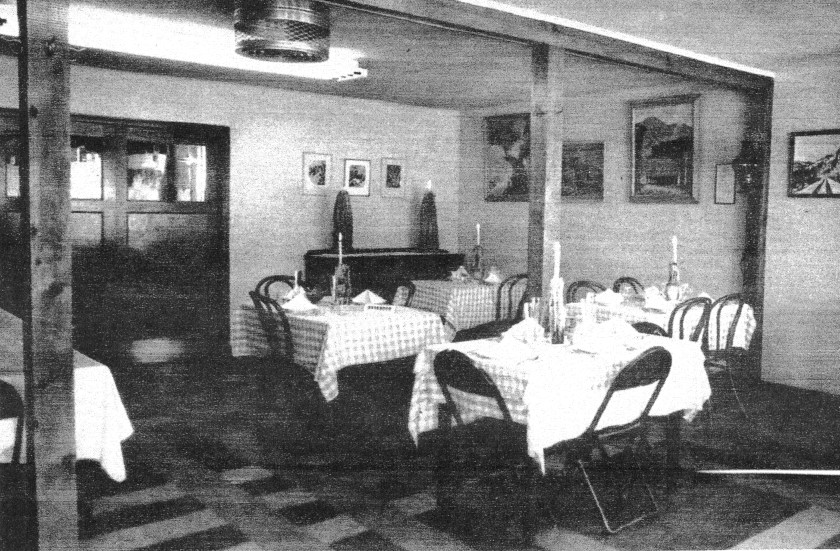
Benhard’s restaurant, Colfax, California, 1940s. All photos courtesy of American Restaurant Magazine, December 1949.
Benhard’s restaurant in Colfax was famous in the 1940s for two things: its delicious food and its mimeographed Road Information Bulletins that were distributed throughout the western states. The bulletins provided road information about U.S. Routes 40 and 30, describing road conditions across the United States from California to Pennsylvania, New Jersey, and New York.
The front of Benhard’s business card.
Each issue of the bulletin “gave the motorist what he wanted and needed first,” according to an article about Benhard’s that was published in the American Restaurant Magazine, December 1949.
Each issue began with a short overview of the cross-country driving conditions, and then it went “into great detail telling exactly what road conditions” were, identifying detours and possible rough spots, and calling attention to road stops that had “most of the facilities of civilization.”
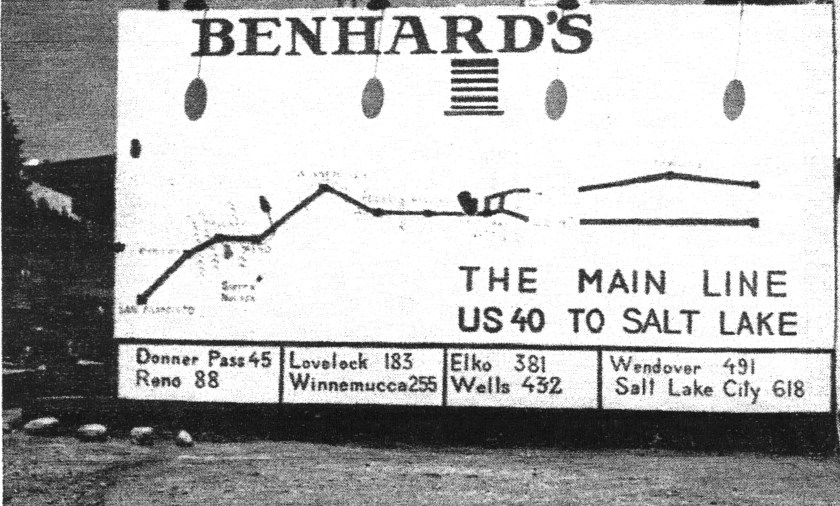
A billboard for Benhard’s restaurant, Colfax, California, 1949, showing distances from Benhard’s to cities in Nevada and Utah on U.S. Route 40.
For example, the bulletin for October 20, 1949, contained
“…a report on highway deaths and the causes for the fatal accidents; correct information on the exact amount of snow in the Sierra Nevadas; a detailed report on the conditions of the highway; a list of service stations operating 24 hours a day; traffic comparisons on various highways to California; a warning of a speed limit reduction on the Golden Gate bridge; news of a safer entrance into San Francisco; an ‘editorial’ on courteous driving; a few other items of motorist interest; … and then, and not till them, a message about some of the foods people drive miles to Benhard’s to enjoy.”
In 1945, Mr. and Mrs. F. H. Benhard opened their restaurant two blocks from Highway 40. They had to compete with three restaurants located next to the highway. Mr. Benhard told the American Restaurant Magazine that “the motorists felt our competitors served good food, too, and they did.
The interior of Benhard’s restaurant, Colfax, California, 1940s.
“That left us with one dream and one restaurant and about one customer.” One of their competitors had received “considerable publicity from a newspaper column” and some of the competitors been recognized by one of the eating guides. At the same time, the Benhards saw that there was
“considerable room for improvement of road information on Route 40; road information that was up to the minute; road information that would tell the motorist exactly what to look for as he wheeled through the mountains eastward or toward San Francisco. The Benhards made an experiment—did a little prospecting, and they struck gold. They began the series of Benhard Road Information Bulletins—simple, mimeographed sheets, which they distributed through dependable service stations on the Overland Route (30 and 40) in the states of Nebraska, Wyoming, and Nevada.”
Grateful drivers visited the restaurant “by the thousands.” The bulletin’s success brought so many people to Benhard’s restaurant that the couple who owned it were able to move to a new location on highway 40.
The back of Benhard’s business card, showing distances from Benhard’s to cities in California, Nevada, Utah, and Wyoming,
Note: So far, we haven’t been able to figure out where either of Benhard’s two locations were in Colfax. The first was several blocks away from Route 40; the second was on Route 40. If you know anything about Benhard’s history or where it was located, please leave a comment below or send us an email at museum@colfaxhistory.org
Where is U.S. Route 40?
U.S. Route 40 is a major east-west highway connecting Utah, Colorado, Kansas, Missouri, Illinois, Indiana, Ohio, West Virginia, Pennsylvania, Maryland, Delaware, and New Jersey. Originally its western terminus was San Francisco, California, but the construction if I-80 replaced the California to Utah section of Route 40. Route 40 itself replaced two older highways: the eastern National Road that was created by Congress in 1806 and ran from Maryland to Illinois, and the Victory Highway that was a memorial to WWI veterans and ran from Kansas City to San Francisco. (See “U.S. Route 40,” Wikipedia.)
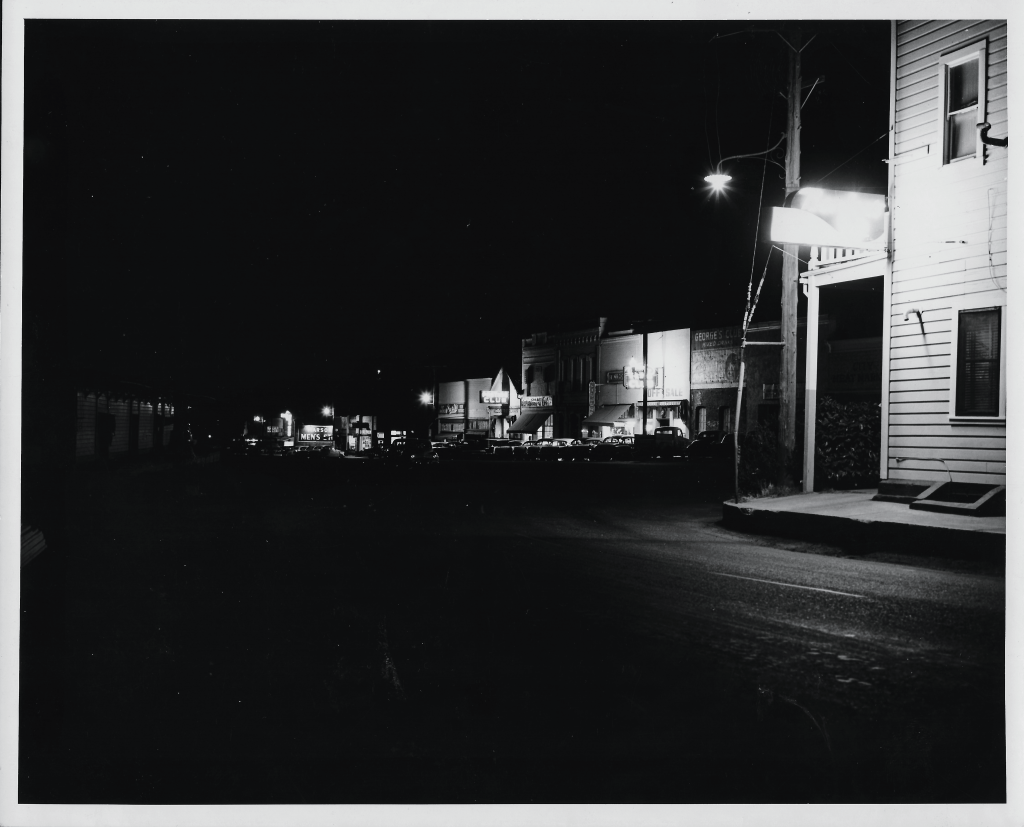
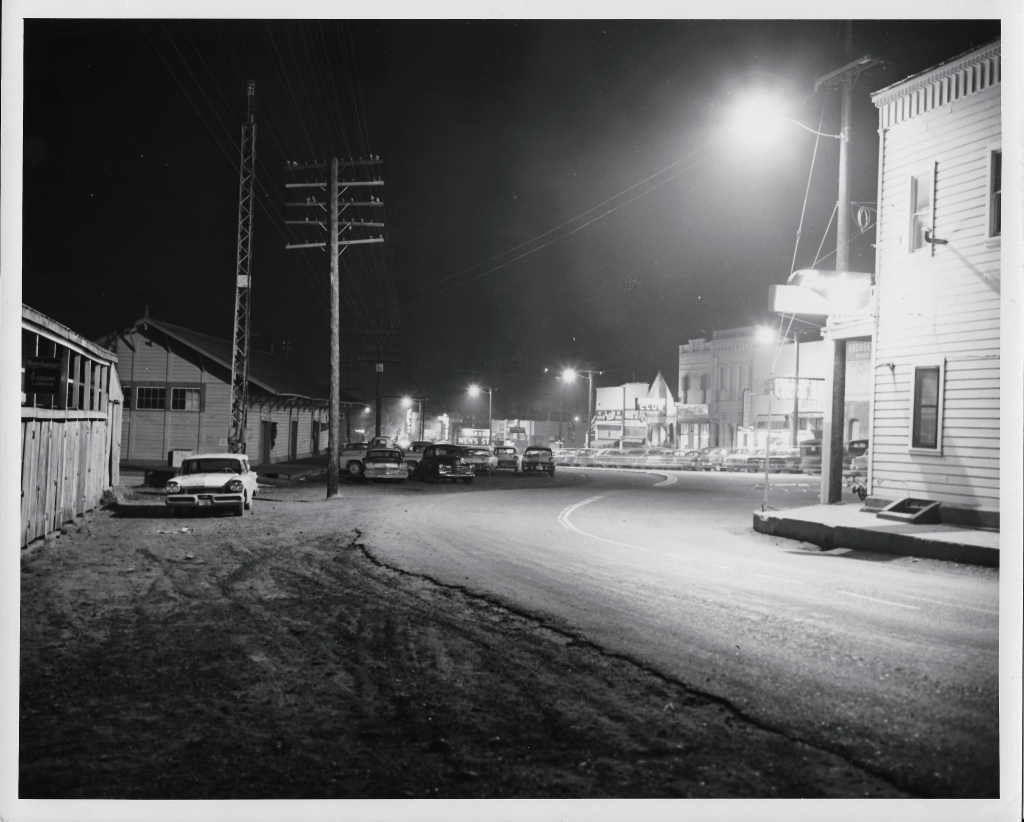
Three photos of downtown Colfax, California, from the 1950s got some attention on our Facebook page this week. The nighttime photos were taken by L. R. Farrell, Grass Valley, California. Copies of the photos were donated to the historical society in 1999.
The October 21, 2023, presentation has been canceled.
Attendance at the quarterly presentations has dwindled since we restarted the presentations after COVID.
The board has decided to switch to one presentation in the summer, with a speaker that will draw a large crowd. It will be held in a larger, more comfortable location that will allow as many people to attend as are interested.
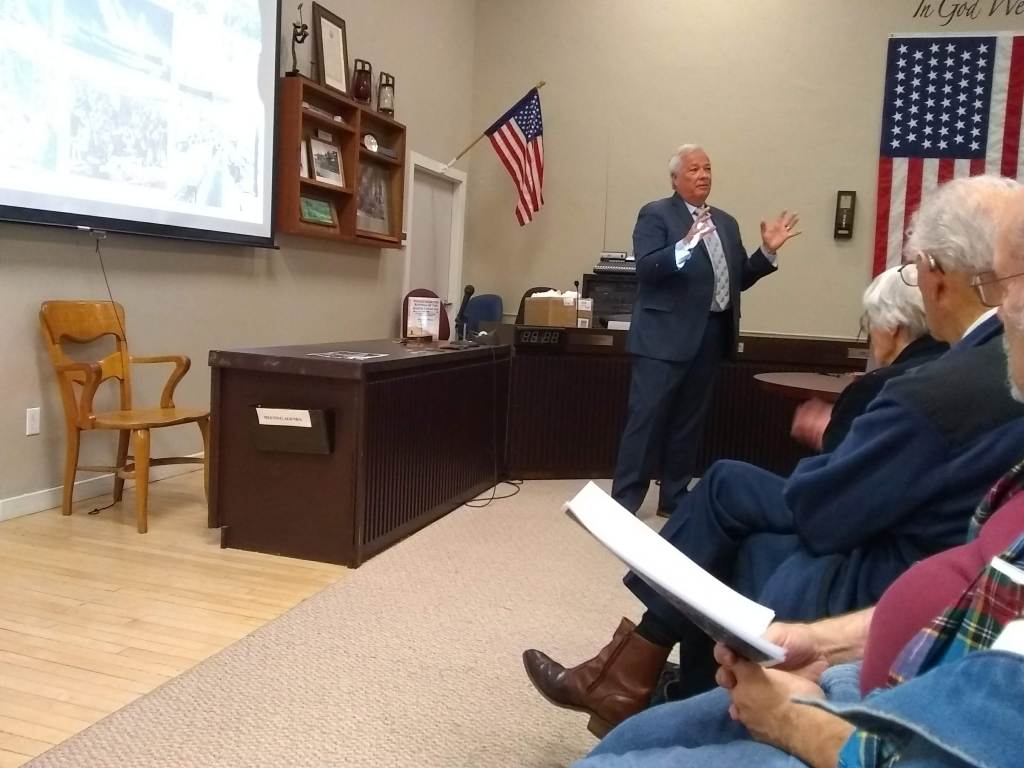
We will be planning an event such as the one we held in October 2019, with Robert S. Wells, author of Voices from the Bottom of the South China Sea, which was held in the City Council Chambers of the Colfax City Hall.
Robert S. Wells, author of Voices from the Bottom of the South China Sea, spoke in a special presentation, which was held in the City Council Chambers of the Colfax City Hall, October 20, 2019.
If you have any suggestions for speakers/authors or comments about this change, we would love to hear from you in an email to museum@colfaxhistory.org (you can also click the Contact Us link at the top of the page to send us your comments).
By Roger Staab. “The Train Wreckers: August 31, 1881” was published in the current issue of Donner Crossings, Issue No. 17, Summer 2023. Donner Crossings is published by the Placer-Sierra Railroad Heritage Society and is made available here with the permission of the PSRHS.







 Colfax Area Historical Society (CAHS) and Colfax Heritage Museum (CHM)